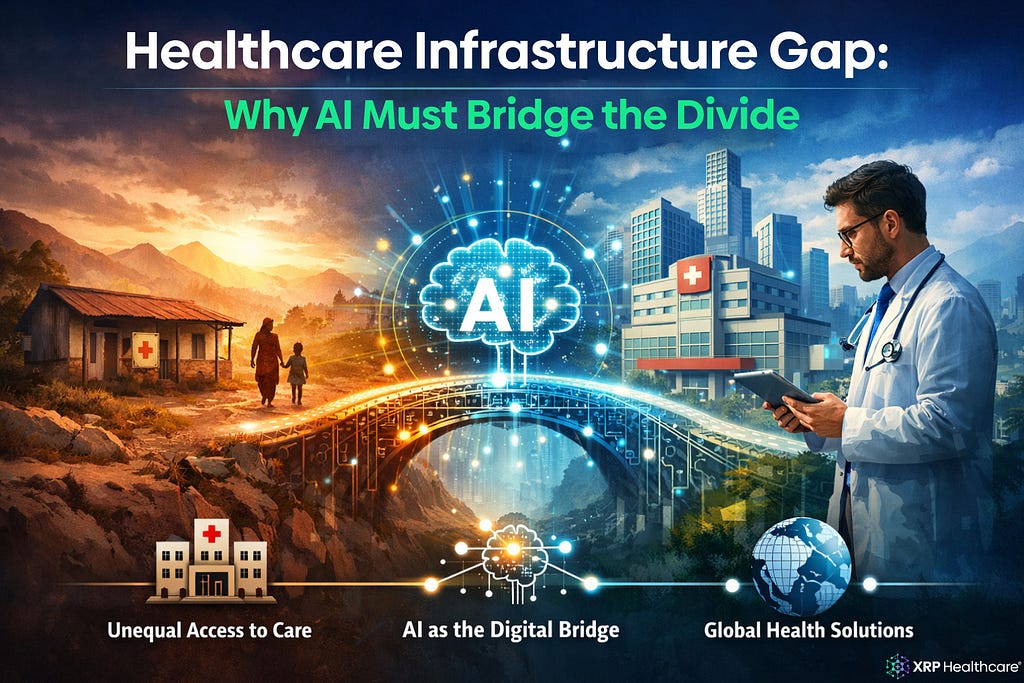

Across the world, healthcare systems face a pervasive challenge: the infrastructure gap. While technology has transformed many industries, healthcare delivery — particularly in underserved regions — continues to struggle with access, quality, and responsiveness.
Artificial intelligence (AI) is emerging not just as a tool, but as a bridge to overcome these limitations. By meeting people where they are, AI can expand accessibility, support early engagement, and help healthcare systems operate more efficiently under pressure.
This article explores how AI is being positioned as a bridge across the healthcare infrastructure gap — and why context, trust, and thoughtful design matter along the way.
Understanding the Infrastructure Gap
Infrastructure in healthcare is more than physical buildings or equipment. It includes networks of care, pathways of information, trusted guidance systems, and the ability to reach people in a timely manner.
In many regions:
- Clinics are understaffed
- Specialists are inaccessible
- Waiting times are long
- Information gaps persist
These challenges add friction at every step of a patient’s journey.
While digital innovation has improved elements of healthcare delivery, the infrastructure gap persists — especially where resources are limited and demand is high.
Why Access Matters Before Innovation
Innovation matters. Better diagnostics, promising treatments, and advanced therapies all have roles to play. But when foundational access is missing, high-end innovation cannot reach its potential.
Access is the first mile of the healthcare journey. Without it:
- People delay seeking care
- Conditions worsen unnecessarily
- Preventive opportunities are lost
In many cases, access barriers exist long before someone enters a clinic or interacts with a clinician. That’s where AI’s promise begins.
AI as a Bridge — Not a Replacement
Artificial intelligence is not a replacement for doctors, nurses, or health systems — but it can act as a first point of engagement.
AI solutions can deliver:
- Real-time guidance
- Personalized health information
- Language-accessible support
- Early symptom exploration
- Contextual recommendations
This means individuals everywhere — from rural villages to dense urban centres — can receive initial guidance long before they reach formal care settings.
Design Matters: Context First
For AI to bridge infrastructure gaps effectively, it must understand the people it serves.
Successful healthcare AI must be:
- Relevant to local context
- Sensitive to cultural differences
- Capable of supporting diverse languages
- Aligned with real-world condition
- Trust-worthy and transparent
AI that ignores context may deliver technically correct answers but fail to resonate with real users. In healthcare, relevance is essential — good guidance occurs only when systems understand both the clinical and human dimensions of care.
Building Trust in AI Systems
Healthcare is personal. People are understandably cautious about advice delivered by machines. That’s why trust and transparency are critical.
Trust in healthcare AI is built through:
- Clarity about how recommendations are generated
- Alignment with trusted clinical standards
- Responsible handling of data and privacy
- Feedback loops that improve accuracy over time
Without trust, AI systems risk underutilization — even if they perform well technically.
Real-World Impact Across Populations
The true test of healthcare AI is not in theory but in real use. When thoughtfully designed and implemented, AI can:
✔ Reduce unnecessary clinic visits
✔ Help prioritize urgent needs
✔ Provide guidance in resource-limited settings
✔ Enhance health literacy
✔ Support early intervention
Across low-resource regions, this early engagement can be life-changing. It enables individuals to act with clarity long before they ever reach a traditional care environment.
The Future of Healthcare Delivery
The healthcare infrastructure gap is not a short-term problem. It is a structural challenge rooted in access, equity, and human behaviour.
AI offers a bridge — not a bypass. The future of healthcare delivery will likely involve:
- Integrated human + machine care pathways
- Systems that meet people where they are
- Early engagement and guidance at scale
- Data-informed decision tools
- Greater accessibility and efficiency
These changes won’t happen overnight. But the direction is clear: healthcare systems that embrace contextual, trust-centered AI will be better equipped to serve diverse populations in the years ahead.
Final Thought
Infrastructure isn’t just physical. It’s the pathways, networks, and systems that connect people to care.
AI, when designed with context and trust at its core, has the potential to bridge gaps that have persisted for decades. This doesn’t diminish the role of clinicians — it amplifies it by expanding access and improving the early stages of health engagement.
About XRP Healthcare
XRP Healthcare M&A Holding Inc. is a Dubai-based healthcare acquisition and technology company focused on AI-powered healthcare initiatives and pharmacy M&A across Africa. The company is building infrastructure designed to improve access, connectivity, and operational efficiency across emerging healthcare markets.
The XRPH AI App is part of this broader strategy — supporting digital access, patient engagement, and scalable healthcare delivery models.
This article was originally published at www.xrphealthcare.ai, where you can explore more insights on healthcare infrastructure, AI deployment, and execution strategy in motion
#Bridging #Healthcare #Infrastructure #Gap
About the Author