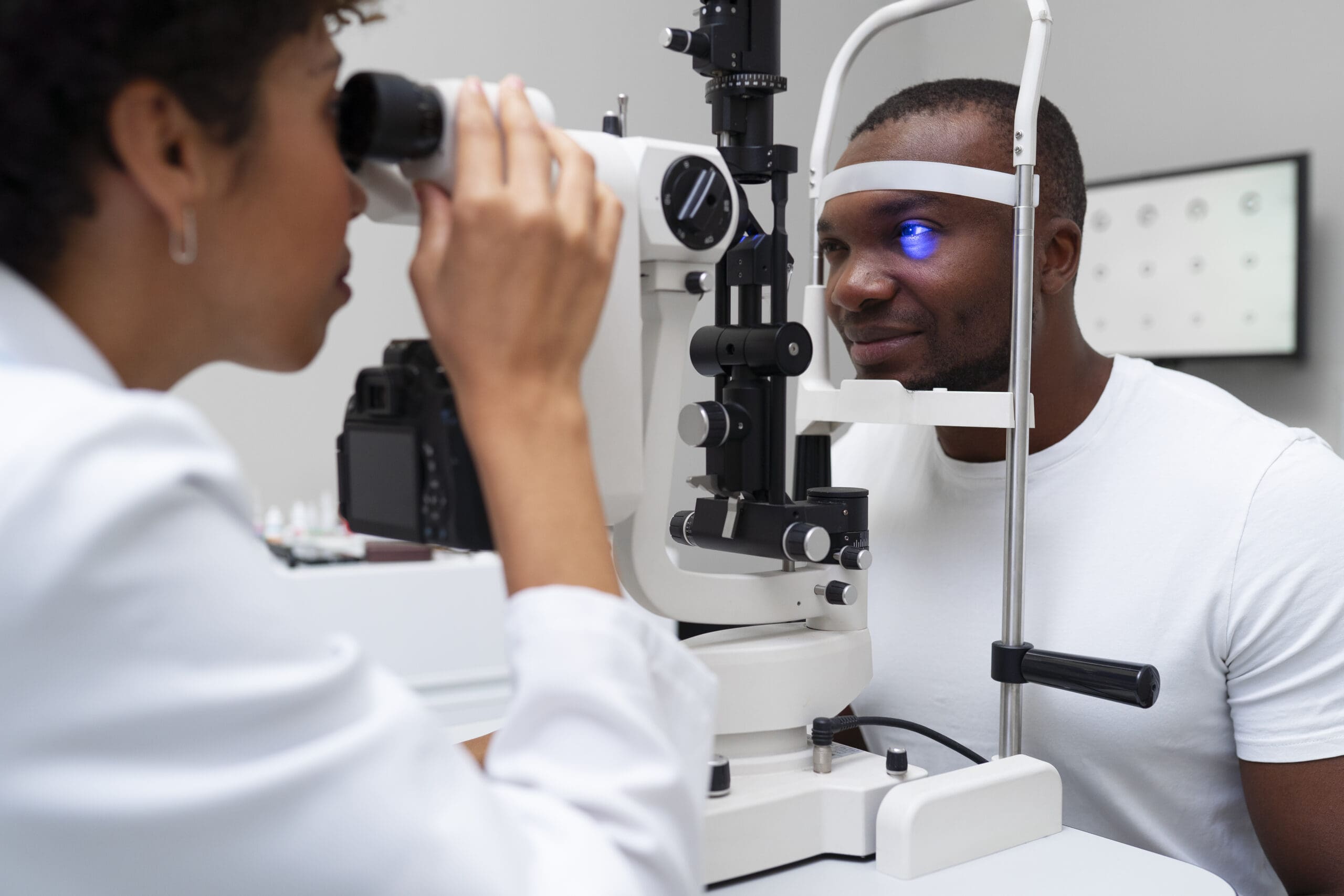
More than 4.22 million U.S. adults are living with glaucoma, according to the Vision and Eye Health Surveillance System at the CDC. Glaucoma is a disease related to pressure within the eye. The most common form, open angle glaucoma, usually has no symptoms in the early stages. That’s why so many people do not know they have it until vision loss has already begun.
Anyone can develop glaucoma, but some groups face higher risk. For Black communities, the risk is especially serious. Glaucoma is one of the leading causes of irreversible blindness in the United States, and while there is no cure, early detection and treatment can protect your sight.
The Types of Glaucoma
Glaucoma isn’t just one disease. It’s a group of conditions that damage the optic nerve, usually because of increased pressure inside the eye. The most common form in the U.S. is primary open-angle glaucoma, which develops slowly and without symptoms.
There are other types as well:
Angle-Closure Glaucoma
This type happens when the drainage angle suddenly becomes blocked. Pressure rises very quickly and it causes strong eye pain, headache, nausea, and blurry vision. This is an emergency and needs immediate treatment to prevent permanent vision loss.
Secondary Glaucoma
Secondary glaucoma develops because of another problem in the eye, like an injury, inflammation, advanced diabetes, or long-term steroid use. These issues can raise eye pressure and block the drainage system. It can develop slowly or more quickly, depending on the cause.
Congenital Glaucoma
This rare type is present at birth. The eye’s drainage system didn’t form the right way, so pressure builds early. Babies may have large or cloudy-looking eyes, tearing, or sensitivity to light. Early treatment is important to protect vision.
Who Is at Higher Risk for Glaucoma?
Race
Black Americans face a disproportionate burden. According to a 2024 meta-analysis published in JAMA Ophthalmology, 3.15 percent of Black adults had glaucoma in 2022 compared with 1.43 percent of white adults.
Age
Risk increases with age. Adults over 60 are much more likely to develop glaucoma than younger adults.
Family History
A family history of glaucoma increases your risk, especially if a parent or sibling has been diagnosed.
Medical Conditions
Conditions like diabetes, high blood pressure, and heart disease may increase glaucoma risk. These conditions already affect our communities at higher rates, which makes regular eye exams even more important.
Corticosteroid Use
Steroids, also called corticosteroids, are medications that reduce inflammation and are commonly used for asthma, allergies, and autoimmune conditions. Most people use low doses safely, but long-term or high-dose use can raise eye pressure. This is a reminder to talk with your doctor about any long-term medications and how they may affect your eyes.
Eye Injuries
Serious eye trauma can raise eye pressure or damage the drainage system. Glaucoma from injury can show immediately or even years later.
Other Factors
Extreme nearsightedness, thin corneas, retinal detachment, eye tumors, and chronic eye inflammation can all contribute to glaucoma risk.
How Often Should You Get Checked
How often you need an eye exam depends on your age and your risk. If you’re under 40 and don’t have any known risk factors, a comprehensive eye exam every few years is usually enough.
Once you turn 40, eye health starts to change, and glaucoma becomes more common. The American Academy of Ophthalmology recommends:
- Every 1-2 years fir adults ages 40-54.
- Every 1-3 years for adults ages 55-64.
- Every 1-2 years for adults 65 and older.
Because glaucoma is more common in the our community and tends to appear earlier, Black adults should start getting exams every 1-2 years beginning at age 40.
How to Protect Your Eyes
You can’t fully prevent glaucoma, but small habits can support eye health and lower your risk.
- Protect your eyes during sports, yard work, or any activity where something could hit your eye.
- Know your risk factors, including age, family history, diabetes, and long-term steroid use.
- Keep up with regular eye exams since glaucoma often has no early symptoms.
- Limit very high caffeine intake if you’re at higher risk, since large amounts can raise eye pressure.
- Avoid activities that put your head lower than your heart for long periods, like headstands, because they can temporarily increase eye pressure.
- Eat leafy greens like spinach and kale to support healthy blood flow to the eyes.
- Stay active, even with simple daily movement, like walking.
- Avoid smoking and heavy alcohol use.
- Take glaucoma medications exactly as prescribed if you already have the condition.
The Good News
With medication, laser treatment, or surgery, it is possible to slow or stop further vision loss. Early detection is key. Protecting your sight starts with showing up for that eye exam, especially if you are Black, over 40, or have a family history.
Resources:
VEHSS Modeled Estimates: Prevalence of Glaucoma | Vision and Eye Health Surveillance System (VEHSS) | CDC
Prevalence of Glaucoma Among US Adults in 2022 – PMC
Frequency of Ocular Examination – American Academy of Ophthalmology
#Risk #Glaucoma
About the Author